
If AI can do it, a human doesn't have to
How we made AI our "employee" before hiring a third person

Challenges
- Running five businesses with only two executives had stretched their resources to the limit, and they were considering hiring a third person.
- They had been using tools like ChatGPT and Notion AI in one-off ways to ease the resource shortage, but doubts about quality kept them from attempting practical-level development or automation.
- With no development background, they couldn't judge whether AI-generated code was any good, leaving them anxious about maintenance even if they did build a tool.
Solution
- Solving in-house challenges through AI Coaching that teaches "how to fish" (the development method) rather than handing over "the fish" (the finished product).
- Using Cursor so that even non-engineers can carry a project all the way from design and implementation through to deployment.
- Installing the underlying "concepts" of AI adoption to build a team that is ready to put AI to work.
Results
- The mindset of "maybe AI can solve this too" took hold, dramatically speeding up operational improvements.
- For internal tools, they can now complete a POC (proof of concept) entirely in-house without outsourcing.
- While they are still hiring a third person, offloading the routine work that AI can handle has created an environment where new team members can focus on "the work only humans can do."
About our interviewee
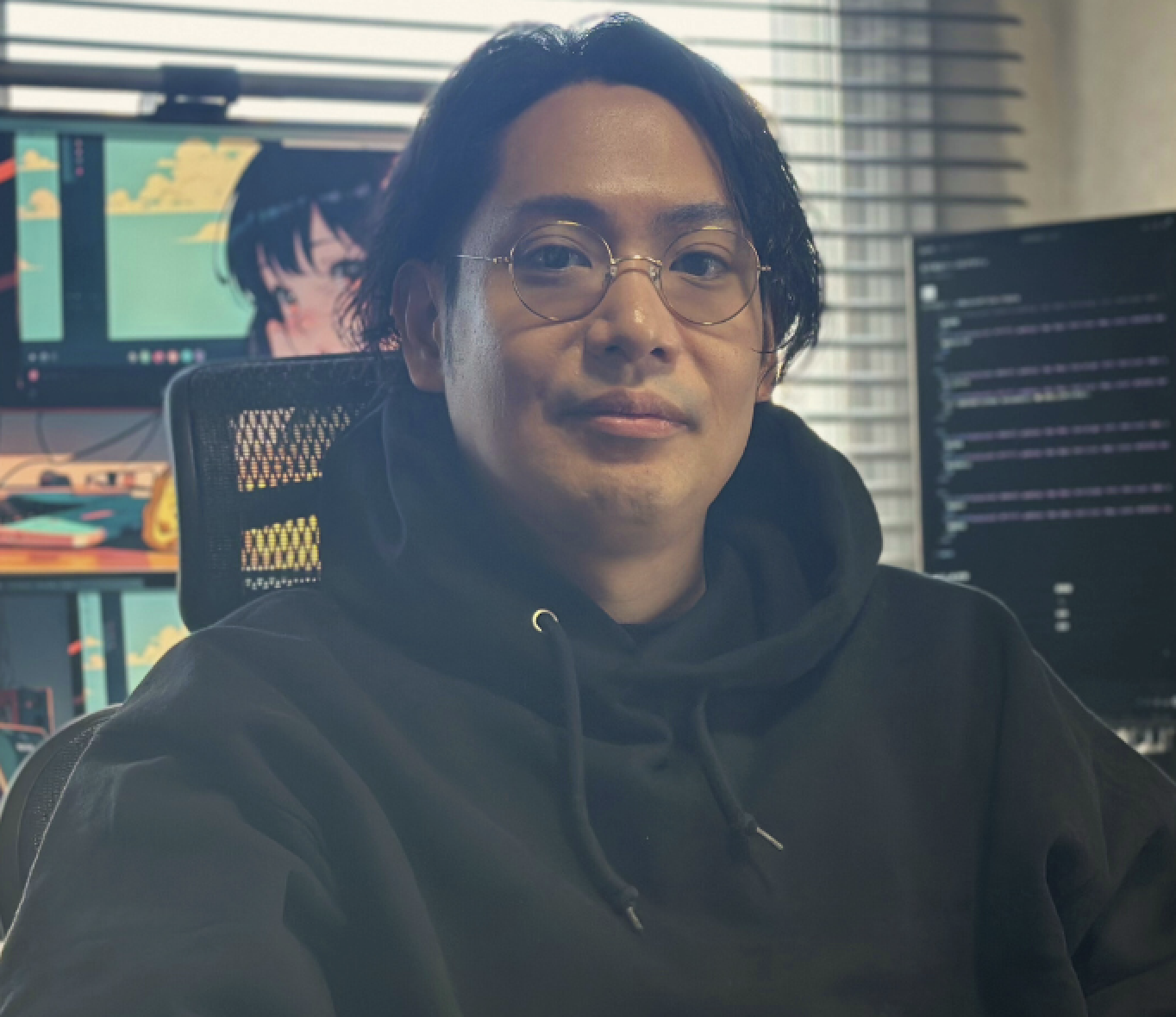
Yusuke Chiba
Chiba: nuy is a startup that has just entered its third year. Aiming to "draw people in from outside the prefecture and revitalize Hokkaido's society and economy," we run businesses centered on areas like travel, food, and accommodation, and we've been expanding rapidly, including through M&A of existing businesses. Right now, two executives are running five businesses, and we also have subsidiaries. Honestly, our resources were always maxed out, and it was right around the time we were saying, "We're going to need to hire a third person soon or we won't be able to keep up."
We'd already been using the paid plans of ChatGPT and Gemini, as well as Notion AI, to a certain extent. We'd put them to "little tricks" — like having them rewrite the HTML for our Rakuten EC product pages to look more polished, or writing GAS to push Google Forms responses to Slack.
But when it came to more serious development, we hesitated. We don't have much development expertise, so even if AI produced something that looked the part, we couldn't judge whether it was actually fit for real use. We worried we wouldn't be able to maintain it if something went wrong. Somewhere in the back of my mind, I also doubted what AI could really do — "It's just AI-grade work, after all."
Chiba: It started with meeting Wolkin at an event. The concrete examples I heard there really sparked something. When I heard about things like "scraping information from property-listing sites and scrutinizing it," my imagination about what AI could do suddenly took off.
What hit home most was the idea that "before you hire someone, push AI to the limit of what it can do for you." Compared to the cost of hiring a single person, investing in seriously learning AI is cheap.
On top of that, I felt that if I didn't study this now, I'd end up like the people who once refused to embrace the internet and got left behind. When I thought about "which side of that divide I want to be on in the future," I became convinced that now was the time to get serious.
Chiba: The best part was that, rather than simply asking them to "build this and deliver it," we agreed from the very start to "have them teach us how to build it" — in other words, to be taught how to fish rather than be given the fish.
What left a particular impression was the lecture on RAG (retrieval-augmented generation). Once I understood the concept of a system that pulls in our own data to generate answers, it became clear how I should be framing my requests to AI.
Encountering the AI editor "Cursor" was also a breakthrough. The sensation of it operating my own computer and writing code on its own was striking, and now I increasingly hand off to Cursor even the areas I used to leave to ChatGPT, including Excel and PDF output. Having someone with real expertise lay out the path for me let me progress with an "achievement-per-time" that's incomparable to self-teaching.
Chiba: For the small day-to-day challenges, the threshold for thinking "hey, maybe AI can solve this" has risen dramatically. If it's something for internal use, we can build it ourselves without outsourcing. This "sense of expanded options" was a change so big it felt like the whole landscape had shifted.
Quantitatively, we're still in the middle of tackling our challenges, but the feeling is that "two people can now do the work of more than three."
Our decision-making around hiring a third person changed, too. We're still recruiting for positions where we physically need people, but there's no need to make a human do what AI can do. Even when someone new joins, they can focus on "the work they're good at that only humans can do" rather than busywork. With AI in place, I feel the very quality of our hiring has improved.
Chiba: There are tons of tips floating around online, but when you actually try it yourself, you get stuck the moment an error pops up. By having a pro guide us from the design stage, we moved forward by the shortest route without getting lost.
For busy executives who "don't have the bandwidth to master AI while also researching it," having a partner who stays right by your side makes a huge difference, I think. Gaining AI as a powerful "third employee" has let us focus more on going on the offensive in how we run the business.
For leaders who want to make AI their edge
Let's find the right first step for your company, together.
Book a free consultation