
Winning at Agriculture × AI from Rural Japan
How FARMAGE, a Hokkaido grazing company, built an AI development team that runs on its own

Challenge
- With no development team in-house, software work had to be outsourced
- Leadership used AI individually, but it never spread through the company, and engineers and non-engineers could not hold a real conversation
- Agriculture and dairy farming are a super-niche field with very little AI adoption, so there was no confidence that development could be brought in-house
Solution
- Introduced Wolkin's AI coaching
- Covered the fundamentals—hands-on with Dify and RAG—through Cursor, AGENTS.md, Skills/Hooks, and approval gates: the harness that keeps you from leaving everything to the AI
- Centered on a junior engineer, the program closed with a live demo building an animal-recognition AI from scratch
Results
- AI use moved beyond "someone to think out loud with" to real work: building workflows that generate materials and documents
- The engineer now runs on his own, and experienced the path from release to software people actually use. Team development and its first principles took hold
- Adopting Cursor raised both development speed and quality. Coding rules and a pull-request practice turned individual know-how into a team standard
The people we spoke with
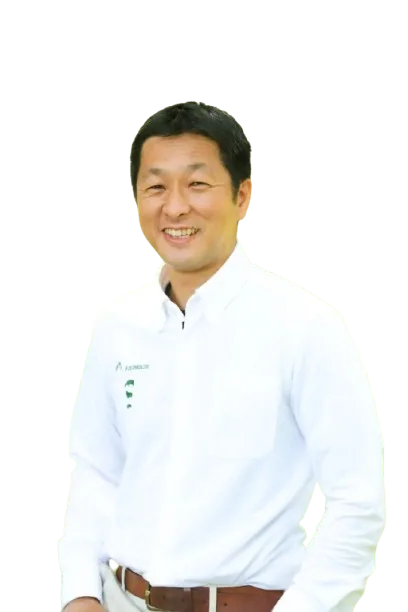
Kenji Takada

Rafif Ramadan
From "a world that runs on fax" to building AI yourself
Takada: "Generative AI" covers a lot of ground. Using ChatGPT internally, putting materials together while talking things over with it—we'd been doing that for a while.
One big factor was Rafif, a junior member doing development in-house, who already had generative AI running inside some of our code. How do we make use of that piece, and how do we grow it? This time we decided to take that on properly.
Takada: We'd always done the planning ourselves—what kind of software farmers could actually use, that sort of thing. But we had no one in-house to turn it into something real, so we relied on outsourcing.
Then the engineer I mentioned joined us. Working alongside him, I felt there was real potential here. It used to be a world where development was hard without several engineers, I think, but I'd heard from someone with overseas experience that "you can do a lot now." And outside information keeps coming in.
At first it didn't have to be 100% in-house. Even if we outsourced, we wanted to reach a stage where we could talk. Rather than receiving proposals knowing nothing, we wanted to be able to hold a conversation. That was step one. Then, as step two, I thought: maybe we can build more of this ourselves.
Individuals could use it. "As a company" was a different matter
Takada: Honestly, it was at the individual level. I was using various tools myself and keeping up with the news, but as for whether that had spread through the company—not really.
With the engineer, too, I couldn't tell what level he was at, because I don't understand engineering itself. And if you can't tell, you can't develop your engineers. I had a sense that I couldn't make him stronger.
Working with Wolkin, I started to see how to develop engineers. We got closer to a state where engineers and non-engineers can talk to each other. On the planning side, you don't know what the engineers are doing. You can see the code, but not how end users will use what's been built. Non-engineers, conversely, understand how users work but not how the thing is made. It felt like Wolkin matched up those two sides.
Rafif: Six months ago, AI to me meant ChatGPT, Gemini, and Claude. Open a browser, ask directly, "How do I do this?" That was the main way I used it.
But AI isn't only that—you can use AI that connects to your code editor, like Cursor or GitHub Copilot. That was new to me. I knew Cursor existed, and I'd used the free version of GitHub Copilot. But within the free tier the tokens run out fast, so both the time and the number of uses were limited. I hadn't really been able to use it seriously.
Why we chose it: "honestly, momentum." But agriculture × AI is a field we can lead
Takada: Honestly? Momentum (laughs). It started with a seminar Wolkin was co-hosting with an acquaintance. In it, Wolkin's own client talked about what they were aiming for and how they'd actually used AI, and that made a real impression.
Agriculture and dairy farming are, to put it bluntly, "a world that runs on fax," a world where you call people on the phone. It's super-niche, completely different from a startup downtown using AI. Our staff have worked in that environment. So when I heard "AI × real estate can lead the field even just regionally," I thought: maybe agriculture × AI can lead too.
I like taking action, so the moment I thought that, I decided to try. To be honest, at that point I had no intent to sell anything or any clear angle—it just happened to be the trigger.
The other thing I care about when I take something on is that both sides grow. Agriculture must be a new field for Wolkin as well, with parts they can't see. But by solving that together, both sides can grow. And I do think we both grew as we went. Of course I want short-term output, but beyond that, this feels like a relationship we can continue as partners.
From RAG fundamentals to building from scratch
Takada: Within a limited number of sessions they stayed flexible—"this part would lift everyone's motivation if we did it this way," or changing content when members rotated. Each time, they fit the material to where our company actually was.
Eighty percent of my own goal was for members to grow and be able to ask questions independently. We're still on the way there, and part of me wishes we'd gotten further.
Rafif: Development speed went up, and I think quality did too. Before, I'd copy code and paste it into the AI; now the files and folders are in the repository, so there's no need to copy and paste—the answer comes right there. The flow of asking questions got simpler.
The other good part is finding, inside the code, the points that need a decision from my manager. I talk through the pros and cons of a decision with the AI, summarize them, and bring that to my manager. That makes it easier for him to decide, too—that was a lesson for me.
Takada: He has more specialized knowledge of engineering than I do, but I think a lot of it had been driven by instinct. He'd had few chances for someone to actually tell him, "here's a better way to do this." Getting that was valuable.
It's still a long road to becoming a leader, but he learned the basic first principles of developing as a team. His vantage point has risen.
There was a time when something he built had a lot of bugs and staff came to him saying "fix this." I think he used to feel that once you've built it with AI, you're done. But having other members use it and seeing the usability firsthand, he seems to have learned a lot. He got to experience the whole arc—shipping it, having the spotlight on it, and finally having it actually used. I think that mattered.
"AI is like a new team member." Rules turn individual know-how into a team standard
Rafif: I learned that you have to put things into words. Code isn't very readable for humans, right? My feel for Japanese isn't great either, so I have AI help me with the explanation when I write a pull request. I can now leave the intent behind the code in words.
And then there are coding rules. Everyone uses a different AI, so left alone it all drifts apart. But if you create a rules file, every AI can follow the same rules. I built and edited that file with AI too.
Rafif: There was. The AI edited or deleted parts I didn't want touched, and that caused problems. That's when I made the rules. If you write "never edit this" into the rules, every AI knows it. Not everyone on the team knows all of the code, but the AI everyone uses does.
Rafif: It's a little paradoxical, but: don't fully trust the AI. I learned there are cases where it fails or rewrites code on its own, so I now work on that assumption. Put in what you expect properly, and build a mechanism that reminds it not to make mistakes. It's the same as when a new team member joins.
From "thinking out loud" to "having AI do the thinking"
Takada: When we started there were fewer things like AI agents than there are now. That was a discovery. With that as an anchor, when something new like Claude appears, I now think about how I catch up on it and how we put it to work here.
How I use it changed as well. I used to mostly think out loud with it; now I use it a lot. It feels like sitting there and having the AI do the thinking. I set up a workflow, drop in materials from each department, and generate documents and materials from those. Where I used to download the output and fix the PowerPoint myself, now I just note the corrections and send them over, and fix things on the AI's side. That's how I work now.
Takada: One is getting support in developing staff we can't develop ourselves. That's big.
The other is that with AI there's simply too much information to process normally. Wolkin sifts through all of it and brings us what matters—the leading edge of it. That helps enormously.
Agriculture × AI, and a future where people stay in the region
Takada: On AI, I want us to use it more "as a company." I use it, but company-wide is genuinely hard. Differences in thinking, security, differences in level. But if we can make it work, productivity in certain areas multiplies.
As a business, I want to create value in dairy farming. The number of dairy farmers is falling about 4% a year. Dairy is a major regional industry, and its decline leads to the decline of the region itself. That's exactly why I want to create new growth with technology, increase the number of people starting out in dairy, and build a situation where people stay in the region.
Takada: When you ask how a super-niche small or mid-sized company survives, I think it changes a great deal just to have someone—or a team—in the leadership who knows AI, even if the owner personally isn't comfortable with it. Ideally, you push that down to the front lines.
Every employee might be too much to ask. But as a starting point, it's well worth taking on. First, just try using it. It starts there.
For leaders who want to make AI their edge
Let's find the right first step for your company, together.
Book a free consultation